


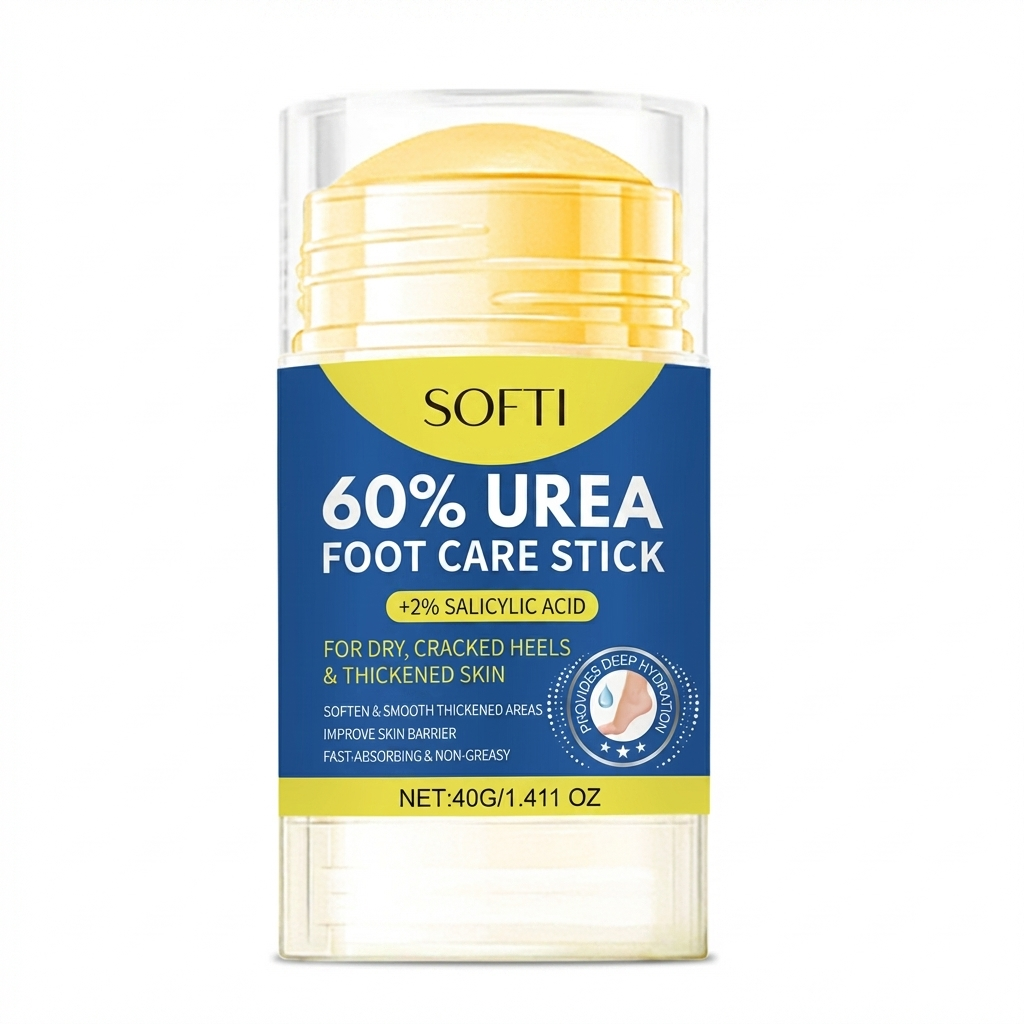
Get baby soft feet with SOFTI
- ✔️ Heals cracks in 7-10 days
- ✔️ 60% urea + 2% salicylic acid
- ✔️ Easy to use, no mess
SOFTI
Couldn't load pickup availability

"For 12 years, I tried everything. O'Keeffe's, Vaseline and socks, pumice stones, even salon pedicures every month....My heels would be smooth for maybe 3 days, then the cracks came right back. Then i started using SOFTI, and the cracks didn't come back."
Sizes
Sizes
3.35 x 1.85 x 1.54 inches
Shipping
Shipping
The average shipping time for USA and UK is 4- 12 days.
Refunds and Returns
Refunds and Returns
We have a 30-Day Money Back Guarantee
We asked our customers and found out....
90%
Saw visible improvement within 7 days... not just smoother surface, but actual crack healing
95%
Said that the cracks have not come back
87%
No longer needed weekly filing or salon pedicures, the callus stayed soft and manageable
87%
Could walk pain-free within 2 weeks , no more bleeding through socks or avoiding certain shoes

How to Use SOFTI
- Apply directly to dry, cracked areas once daily before bed
- Rub the stick across heels in smooth strokes until covered
- For severe cracks, apply twice daily for the first week
- Consistency matters more than quantity, thin layer nightly beats thick application sporadically
- No socks needed, absorbs in minutes, won't stain sheets
- Visible improvement within 5-7 days
FAQs
1. I've tried literally everything. Why would this work when nothing else did?
Because you've been using moisturizers to solve a structural problem.
Think of it this way: cracked heels aren't caused by "dryness" the way your face gets dry. They're caused by keratin buildup , a thick, impermeable layer of dead skin that prevents anything from getting through.
Vaseline, lotion, even O'Keeffe's , they all try to hydrate on top of that barrier.
SOFTI breaks down the barrier itself.
60% Urea + 2% Salicylic Acid is the same formulation podiatrists use clinically. This is likely the first time you're using a high-concentration keratolytic, which is why the results feel so different.
2. How is this different from O'Keeffe's or other foot creams I've tried?
Most foot creams are moisturizers. They sit on the surface and add hydration, but they can't penetrate the thick layer of dead skin causing your cracks.
SOFTI is a keratolytic formula , it chemically dissolves the dead keratin barrier so moisture can actually reach the layers that need it.
That's why moisturizers keep failing you. They're the wrong category of product for cracked heels.
3. How long until I see results?
Most customers report visible softening within 3-5 days.
Deep cracks typically show significant improvement within 7-10 days with daily use.
If you've had severe cracking for years, expect the full transformation to take 2-3 weeks of consistent application.
4. My heels crack and bleed. Can I use this on open skin?
Yes, but avoid applying directly into deep, bleeding fissures.
Apply around the thick callus surrounding the crack , that's what's causing the fissure to deepen. As the callus dissolves, the crack has room to heal from the bottom up.
If you have an actively bleeding crack, clean it, let it dry, then apply SOFTI to the surrounding area (not inside the wound itself).
5. Is the stick format messy?
No. That's the whole point.
Unlike creams that get all over your hands, the stick applies directly to your heels. Rub it on like deodorant , no mess, no greasy hands, no waiting for it to absorb before putting on socks.
Apply it at night before bed. Wake up with softer heels. That's it.
6. Will my heels go back to being cracked if I stop using it?
If the underlying cause continues (standing job, going barefoot, pressure from your gait), yes , maintenance is needed.
Most customers use it daily for the first 2-3 weeks to heal existing cracks, then drop to 2-3 times per week to maintain soft heels.
Think of it like exfoliation. If you stop, dead skin rebuilds. But 2-3x/week keeps it under control without the daily grind.
7. Can I use this on calluses and rough patches on other parts of my feet?
Yes. The formula works anywhere you have thick, dead skin buildup, heels, balls of feet, sides of toes, rough patches on arches.
One stick typically lasts 4-6 weeks with daily heel application. If you're treating multiple areas, expect it to run out faster.
8. I have sensitive skin. Is this too strong?
Urea is both a keratolytic (breaks down dead skin) and a humectant (draws moisture in), so it's gentler than it sounds.
Start with once-daily application at night. If you experience any tingling or irritation, reduce to every other night for the first week.
Most people have zero irritation. But if you have eczema or very reactive skin, do a patch test on a small area first.